Sweden's largest island sits about fifty miles off the mainland coast, and the crossing takes a little over three hours on the fast boat from Nynashamn, closer to four from Oskarshamn in the south. Those two ports are the whole story of getting there by sea, and in July they run at capacity in both directions. That is the first fact worth holding: the ferry is not a detail attached to the trip, it is a scheduled service with a finite number of seats that an entire country wants in the same four weeks.
The second fact is the light. In the first half of July the sun sets on Gotland after ten in the evening and the sky never goes fully dark, so a nine o'clock ride out to the coast is an ordinary thing to do rather than an adventure. People who reserve a trip to Gotland a season ahead are usually buying that specific window, six nights of self catering with bicycles, and they are competing for it with every family in Stockholm who grew up going.
We book six nights because the island is small enough to cover in that time and large enough that four feels rushed. Visby to the northern tip at Faro is about fifty five miles; the southern point at Hoburgen is around fifty from the same start. Neither is a day trip on a bicycle unless you like long days.
- Notice
- Three to five months, the ordinary window
- How far ahead
- Three to five months ahead, measured against your departure date, not against the day the cottages first went on sale.
- What has to be reserved first
- The self catering cottages within cycling distance of Visby go first, and they go in one direction: Swedish families book them for the July weeks from late January onward, and by the middle of April the July inventory inside a four mile ring of the town wall is effectively spoken for. The good part of the window runs from that January release through about the end of March, when you can still name the week and the number of beds. Come in May for a July date and what is left is a cottage twelve to twenty miles inland, a Sunday-to-Sunday block you did not choose, or a room in town at a July rate. The fallback we use most is the last week of August: the same light is mostly gone but the water is at its warmest, the cottages reopen in quantity, and the price drops by roughly a fifth.
- Nights
- 6
- From
- $2,380 per person
- Shape of it
- ferry, bicycles, a walled town and sea stacks
- What is in the figure
- Six nights of self catering accommodation or apartment with kitchen, linens and towels; return ferry deck passage from the mainland with reserved seating; six days of hybrid bicycle hire with helmet, panniers, lock and puncture kit; a printed route sheet for the island's north and south loops with surface notes and distances in miles; one grocery delivery to the cottage on arrival day; transfer from the ferry terminal or airport to the cottage on arrival and back on departure; a written brief on the cottage's water, power and waste arrangements, which on Gotland are not always what you expect.
- What is not
- International flights to Sweden and any domestic connection; the rail or coach leg to the ferry port; all food and drink beyond the arrival delivery; restaurant meals; cabin or lounge upgrades on the ferry, and vehicle space if you bring a car; entry to museums and to the ringed limestone quarries that charge; electric bicycle upgrade; child seats and trailers; laundry beyond what the cottage provides; parking permits inside the town wall; the end of stay cleaning fee where the owner charges it separately; anything you add once you are there.
- Who it does not suit
- Anyone who cannot ride twenty to thirty miles a day on flat but often gravel and loose limestone surfaces, because the cottages that make the price work are not walkable to shops. Anyone tied to a school calendar that only opens in late June, since that is exactly the wrong month to start looking. Anyone who wants to decide six weeks out; at that range we will be honest and put you on a different island or a different month rather than sell you the leftovers.
Limestone, flat roads and a wall that still runs most of the way around
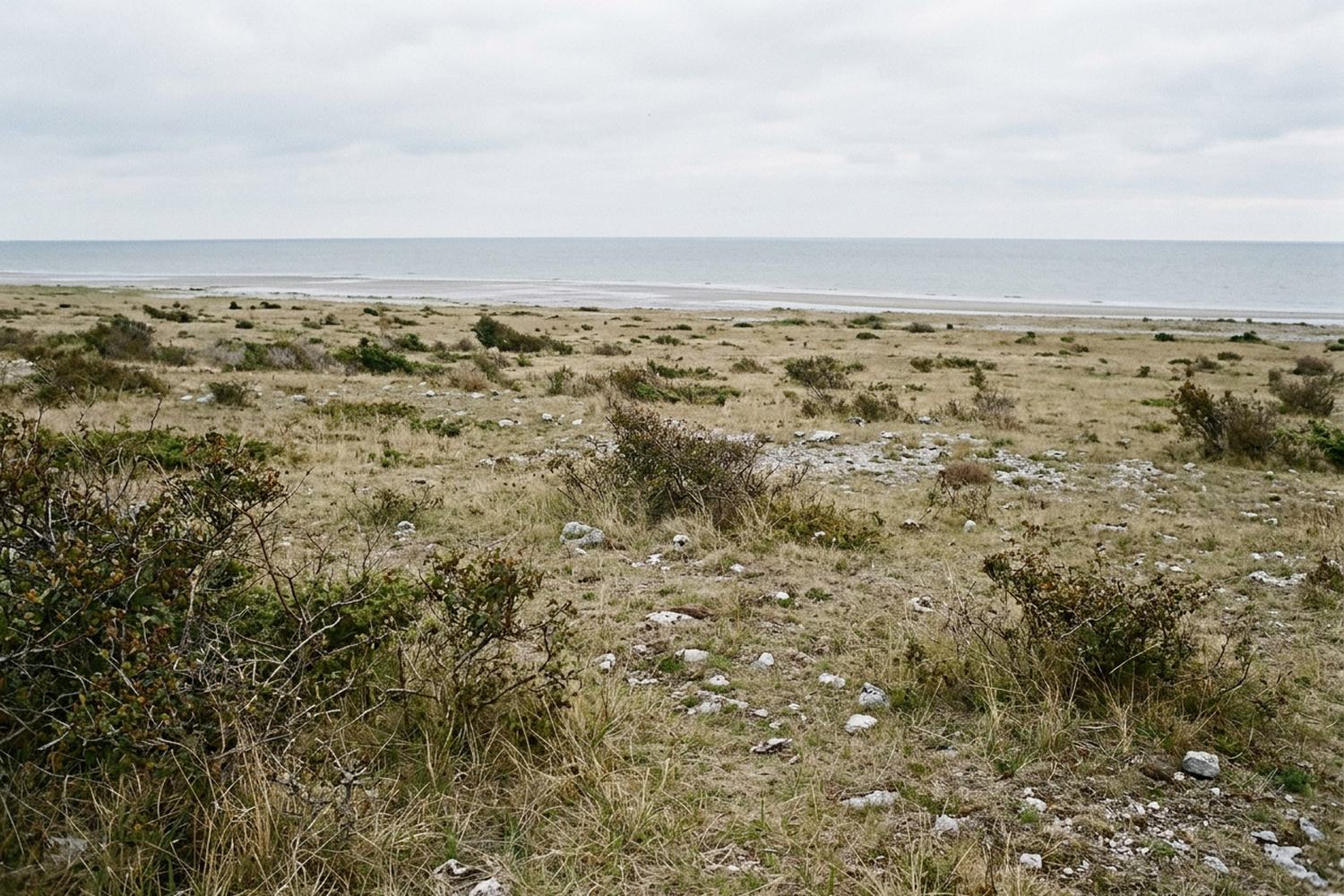
Gotland is a slab of Silurian limestone tilted very slightly toward the southeast, which is why the west coast has cliffs and the east has long shallow beaches. Total relief on the island is under three hundred feet, so nothing you ride is a climb in any meaningful sense. What the surface does instead is change constantly: smooth asphalt on the numbered roads, packed gravel on the farm tracks, and stretches of loose crushed limestone that will slow a narrow tire to a crawl and coat everything in pale dust. The route sheet we hand over marks which is which, because the maps do not.
Visby's wall dates from the thirteenth century and stands close to two miles around, with something like forty four towers still upright. Inside it the streets are cobbled and steep in places, which is the one part of the island where a loaded bicycle is a nuisance. Most people wheel it.
The sea stacks, called raukar locally, are what the island puts on postcards. The largest concentrations are at Langhammars and Digerhuvud on Faro and at Folhammar on the east coast. Faro is reached by a free vehicle ferry that runs frequently and takes about seven minutes, and it takes bicycles without a reservation. In July the vehicle line at Farosund can run to half an hour or more; the bicycle line does not.
What opens in January and what has gone by May
The rhythm is consistent year to year. Private cottage owners and the small agencies that manage them put the summer weeks on sale in the second half of January, almost always as Saturday to Saturday or Sunday to Sunday blocks. Swedish domestic demand takes the July weeks first, working outward from Visby. Ferry sailings for peak weekends fill next, particularly the Friday evening southbound and the Sunday afternoon return. Flights to Visby from the mainland are the last to tighten, and they tighten sharply in the final six weeks.
Booking a season ahead puts you in the second wave rather than the third. You will not get the single best cottage on the west coast in mid-July, because that went to somebody who has been renting it every year since the nineties. You will get a good cottage, the week you named, and a crossing at an hour that does not cost you a day.
- Late January
- Summer cottage inventory goes on sale, mostly in week blocks
- Mid-April
- July cottages within four miles of Visby are largely gone
- Early June
- Peak weekend ferry sailings at both ports are full or close to it
- Mid-June
- Direct flights into Visby for July dates are limited and priced accordingly
- Two weeks out
- July self catering is inland, off-week, or not available at all
- Late August
- Cottage availability returns in volume and rates fall by roughly a fifth
From your first message to a confirmed set of dates
We work in writing and we work in order, because the pieces have to lock in a sequence. The cottage is chosen first, since it fixes the week and the direction you will be riding. The ferry is second, matched to the cottage's changeover day. Flights are yours to buy, and we tell you which arrival times actually connect to a sailing, because several of them do not. A message reaches us and is seen before that working day is out; a written figure with named properties and sailing times pricing it out needs two to four working days, longer in February when the cottage lists are moving hourly.
- Your first messageYou tell us the week, the number of beds and how far you are willing to ride to a grocery store
- Property shortlistWe come back with two or three cottages that are actually open for that week, with the water and waste arrangements written out
- SequencingWe hold the cottage, then match a ferry crossing to its changeover day, then tell you the arrival window your flight has to land inside
- ConfirmationCottage and ferry are confirmed in one document, bicycles are sized from your heights, and the grocery order goes on file for the arrival delivery
Tell us the week you have in mind
If you have a July week in your head and it is currently February or March, that is the conversation we would rather have than any other. Write with the week, the number of people and whether anyone in the group needs a lower gear range, and we will tell you plainly what is open and what is not.